
B1. Relating Science and Technology to Our Changing World
B1.1 Change or Problems

Describe changes or problems that could result from the loss of living and non-living things that are part of everyday life, while taking different perspectives into consideration
B1.2 Actions for a Healthy Environment
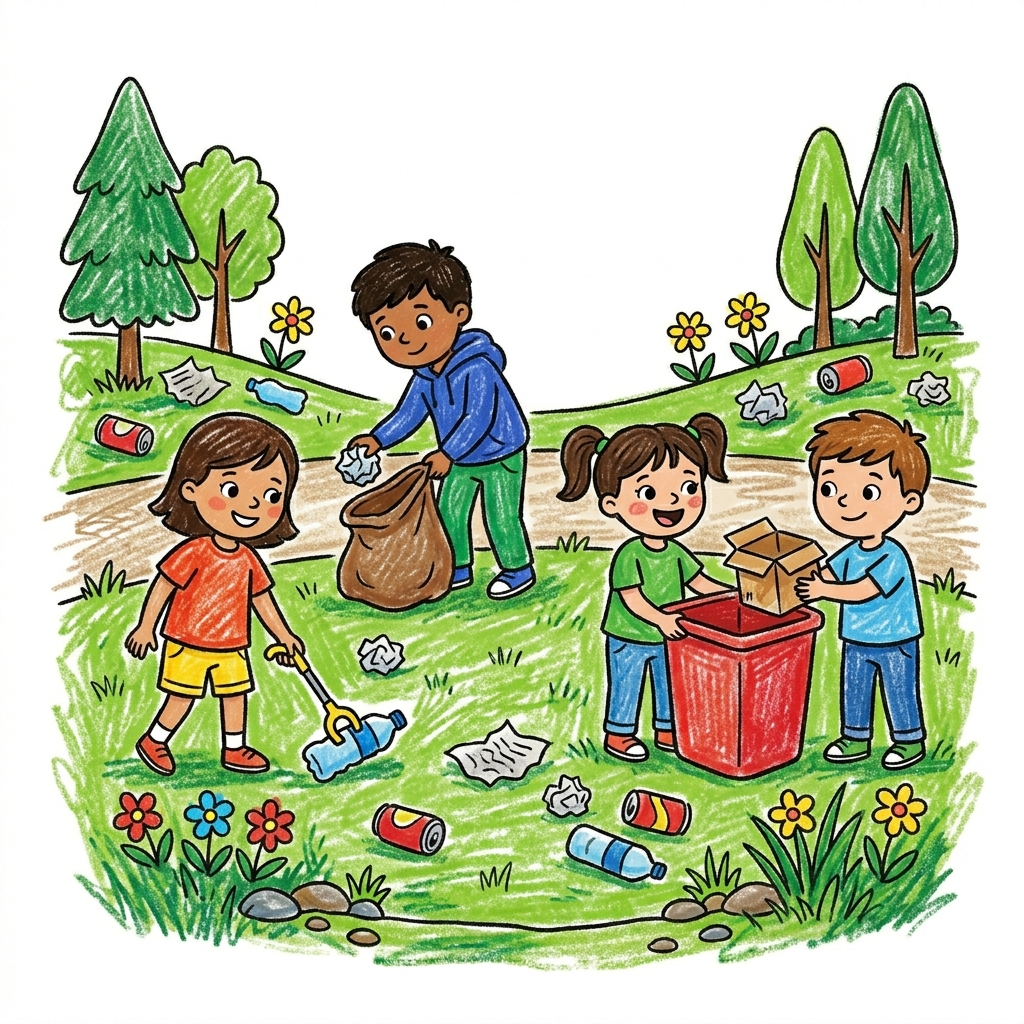
Identify actions that can be taken to contribute to a healthy environment
B2. Exploring and Understanding Concepts
B2.1 Living and Non-Living

Understand that the natural environment is a place where living and non-living things are interconnected
B2.4 Human Body & Senses
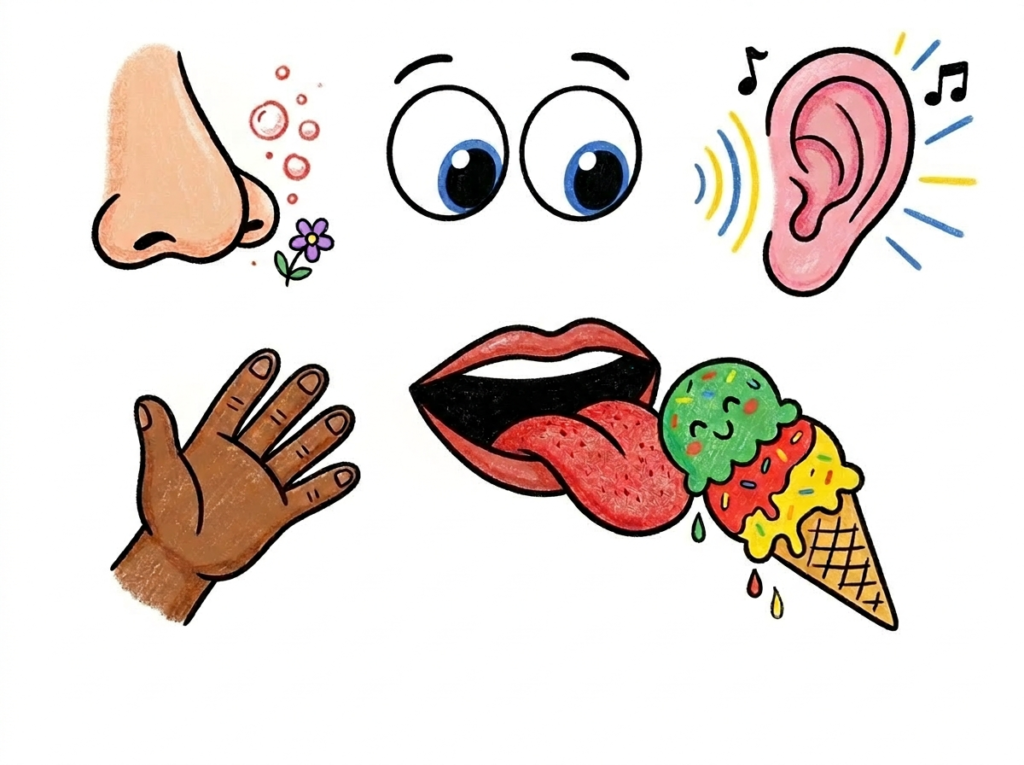
Identify the location and the function of various parts of the human body, including sensory organs
B2.2 Basic Needs

Identify the basic needs of living things, including the need for air, water, food, heat, shelter, and space
B2.5 Healthy Environment

Describe the characteristics of a healthy environment, including clean air and water and nutritious food, and how a healthy environment enables living things to meet their needs
B2.3 Physical Characteristics

Identify the physical characteristics of various plants and animals, and explain how they meet basic needs.
B2.6 Provide for Each Other

Describe ways in which living things provide for the needs of other living things
B2.1 Living and Non-Living Things Are Connected
Teaching young children about the connection between living and non-living things is an exciting and foundational science lesson for a grade one classroom. At this age, students are naturally curious about the world around them, making it the perfect time to explore how everything in their environment interacts and depends on each other.
Introducing Living and Non-Living Things
Start by helping students understand the difference between living and non-living things. Living things are those that grow, need food and water, breathe, and can reproduce. Examples include plants, animals, and humans. Non-living things are objects that do not grow or need food, such as rocks, water, air, and toys.
Select any colouring sheet by clicking its link or image. The PDF will open in a new tab, where you can download it or print as many copies as you need.
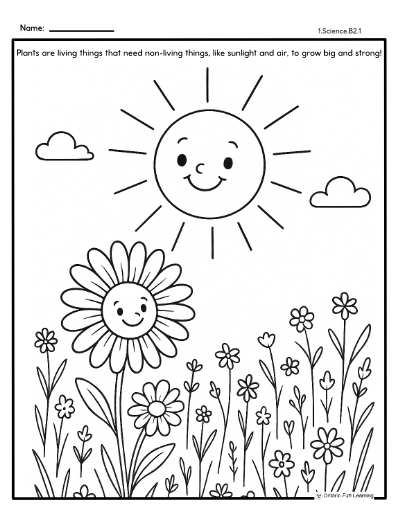
Plants are living things that need non-living things, like sunlight and air, to grow big and strong!
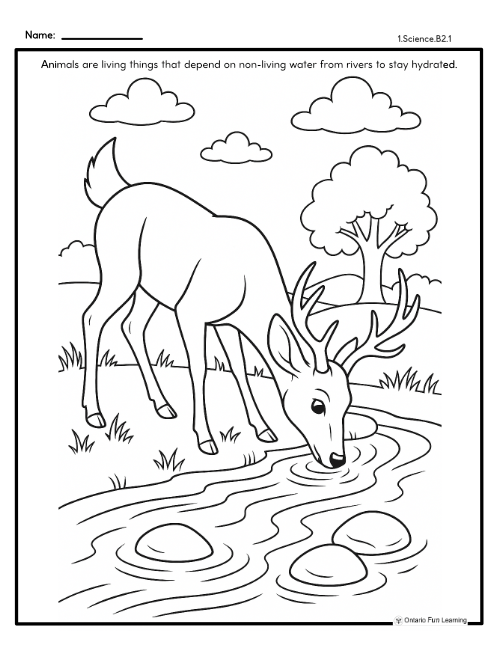
Animals are living things that depend on non-living water from rivers to stay hydrated.

A fallen log is a once-living thing that provides a cozy, safe home for living creatures.

Plants are living things that “eat” non-living sunlight to make their own food!

A living turtle uses a non-living rock to sit on so it can soak up the heat from the non-living sun!
Engaging Activities
- Sorting Game: Provide pictures or objects and have students sort them into two groups: living and non-living. This hands-on activity reinforces their understanding through visual and tactile learning.
- Nature Walk: Take the class outside to observe their surroundings. Encourage them to identify living and non-living things, such as trees (living) and soil or stones (non-living).
- Classroom Garden: Plant seeds in small pots and watch them grow over time. This helps students see firsthand how living things grow and change, while the soil and water they use are non-living but essential for growth.
Explaining Connections
Once students recognize living and non-living things, teach them how these elements connect. For example, plants (living) need soil, water, and sunlight (non-living) to grow. Animals (living) might use water (non-living) to drink and trees (living) to live in or hide.
Use simple language and relatable examples, like how their pet fish lives in water or how the sun helps flowers bloom. Storytelling or drawing can help illustrate these connections clearly.

Living birds use non-living things like wind and air to glide through the sky and reach their nests.

Groundhogs are living things that use non-living soil to build their underground homes and stay warm.

Living frogs depend on non-living water to keep their skin slimy and healthy!

Plants are living things that “eat” non-living sunlight to make their own food!

More coming Soon!
Why It Matters
Understanding the relationship between living and non-living things helps children appreciate the environment and the importance of taking care of both. It lays the groundwork for future science learning about ecosystems, habitats, and conservation.
Conclusion
Teaching grade one students about how living and non-living things are connected nurtures their curiosity and helps them make sense of the natural world. With fun activities and clear explanations, children can grasp these basic concepts and develop a lifelong appreciation for science and nature.
B2.2 Basic Needs of Living Things
Whether it’s a giant Moose in Algonquin Park or a tiny Trillium flower on the forest floor, they all have to find a way to check these six boxes to stay alive: Air, Water, Food, Heat, Shelter, and Space.
What’s the “Why” for Students?
At its heart, we are teaching kids to be Nature Detectives. Instead of just looking at a squirrel and saying “That’s cute!”, we want them to ask:
- “Where does it sleep to stay warm?” (Shelter/Heat)
- “Is there enough room for it to find acorns without fighting other squirrels?” (Space/Food)
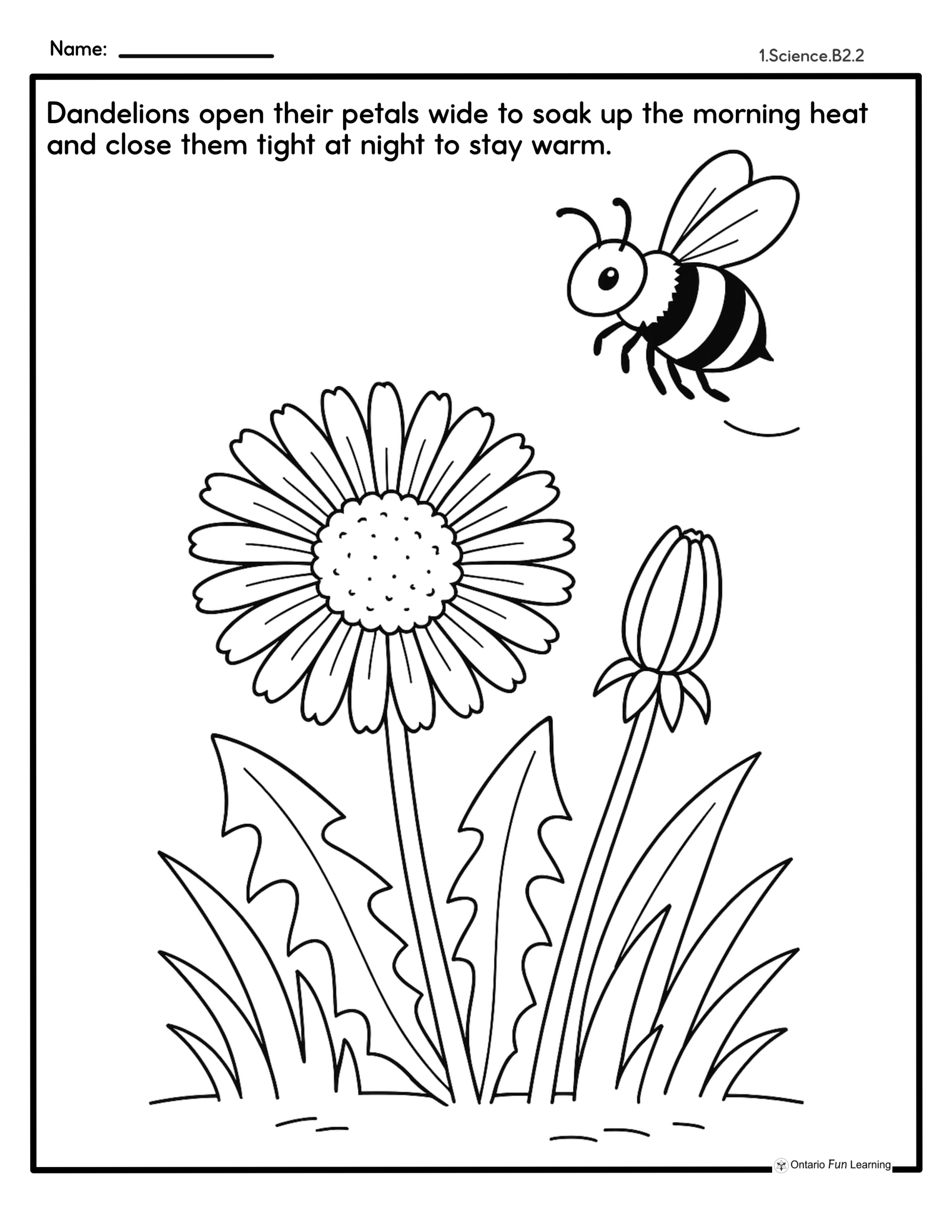
Dandelions open their petals wide to soak up the morning heat and close them tight at night to stay warm.
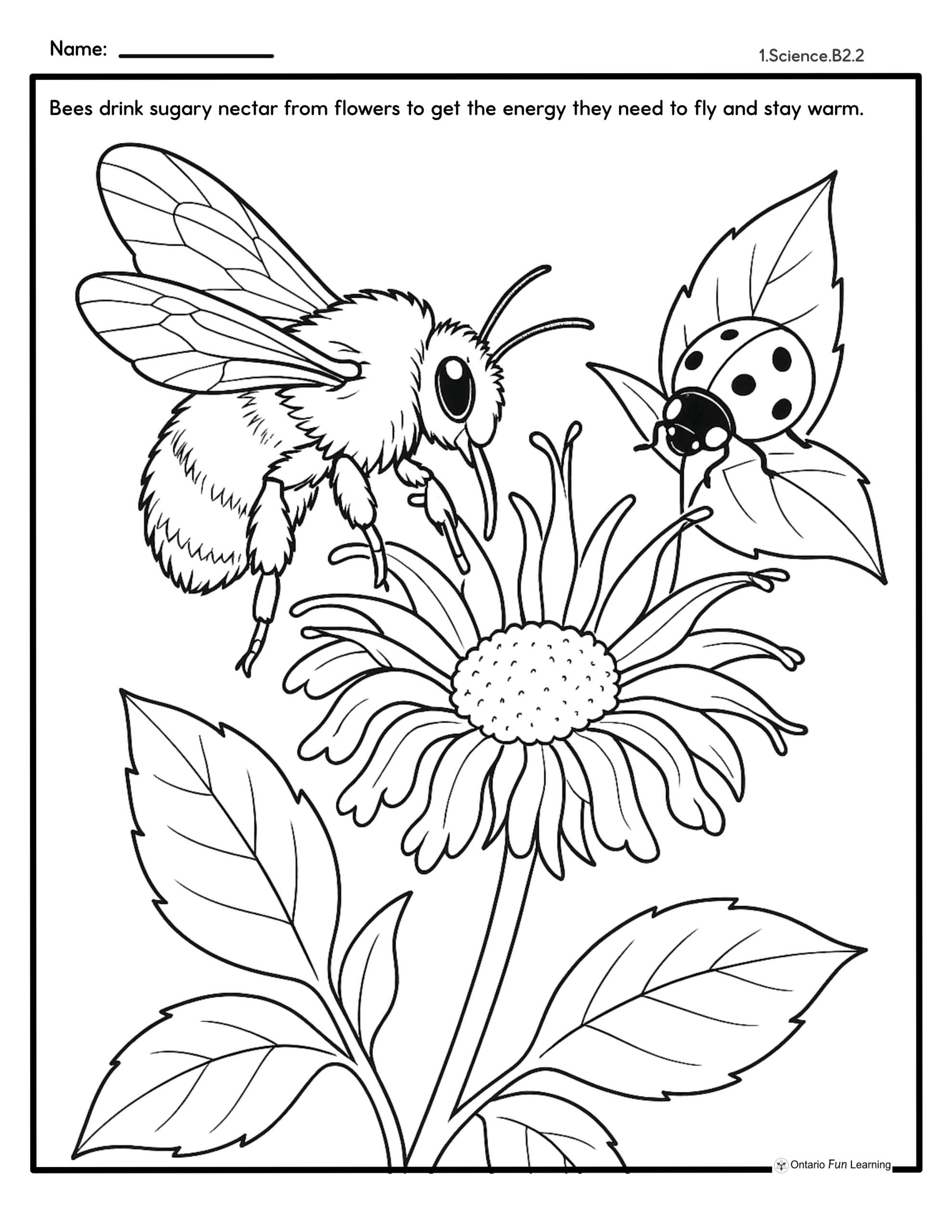
Bees drink sugary nector from flowers to get the energy they need to fly and stay warm.

A Blue Jay needs space to fly and a nest for shelter to keep its eggs safe.
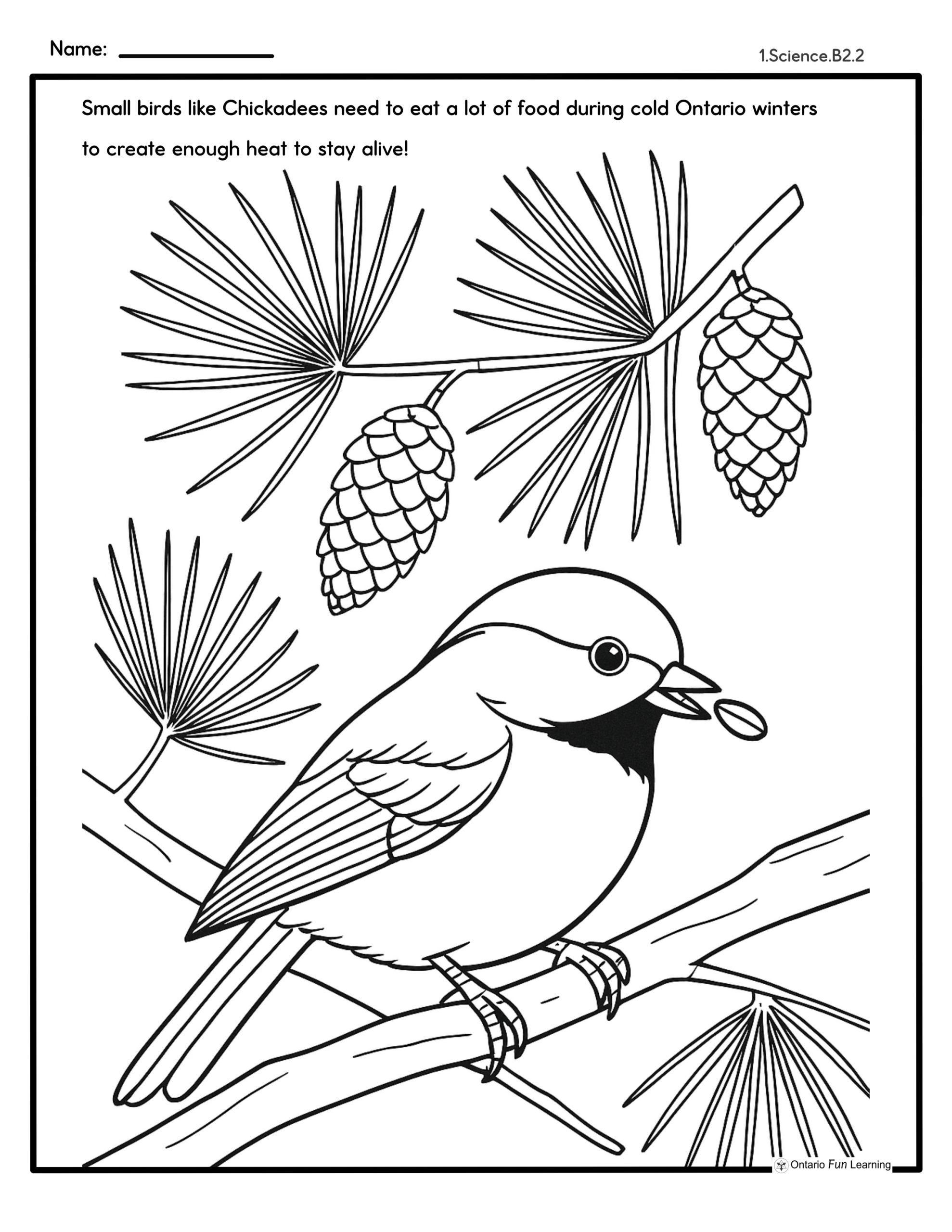
Small birds like Chickadees need to eat a lot of food during cold Ontario winters to create enough heat to stay alive.

Every animal, from the tiny ant to the big moose, needs clean water to stay healthy and hydrated.
The Summary for Teachers & Parents
1. Building Empathy (The “Heart” Connection) When kids realize that a plant gets “hungry” for light or “thirsty” for rain just like they do, they start to care more about the world around them. It turns a backyard or a park into a community where everyone is trying to meet their needs.
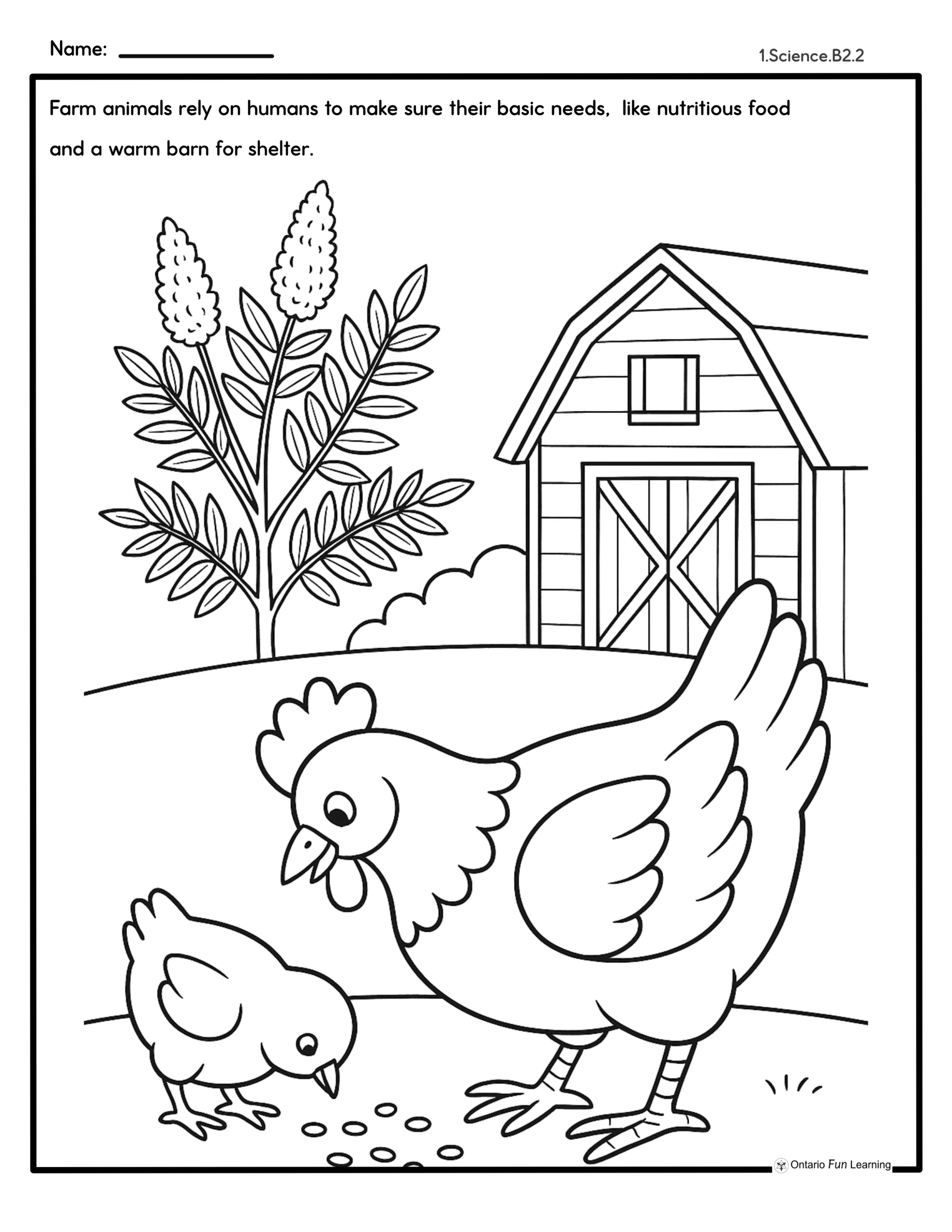
Farm animals rely on humans to meet their basic needs, like nutritious food and a warm barn for shelter.
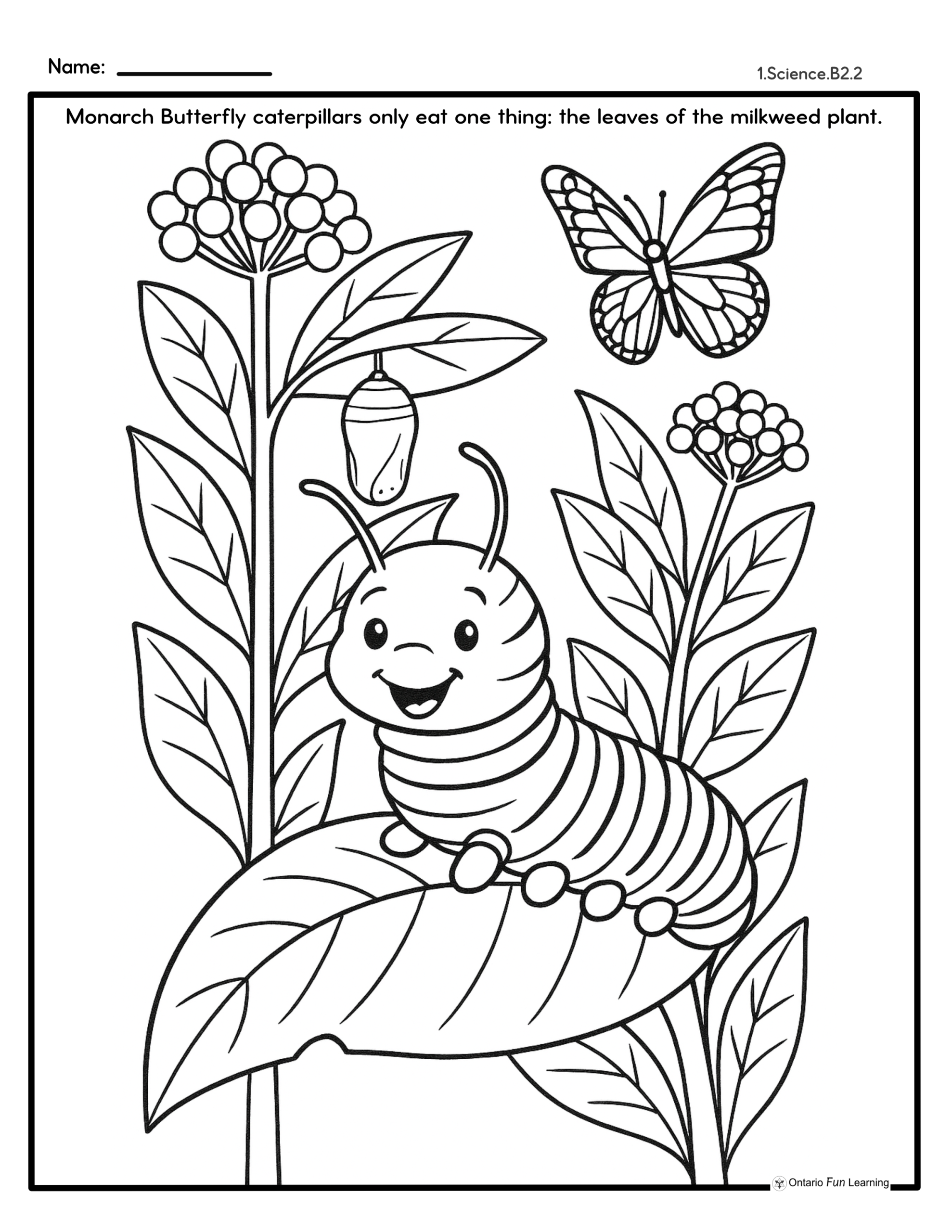
Monarch Butterfly caterpillars only eat one thing: the leaves of the milkweed plant.
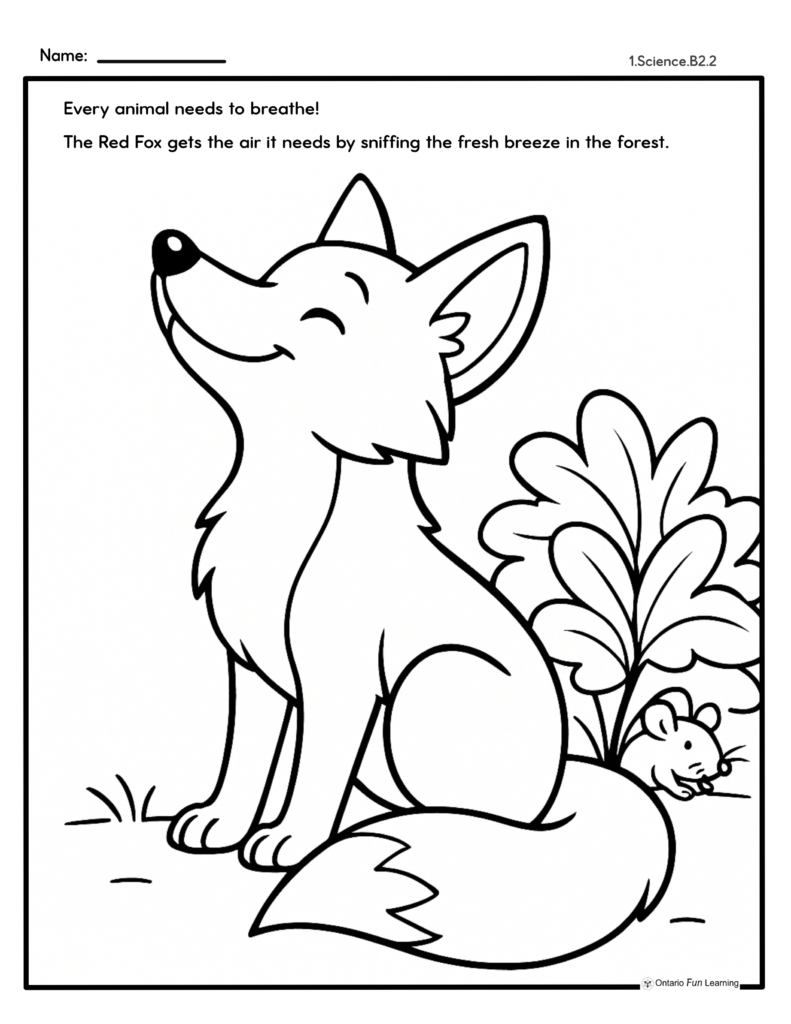
Every animal needs to breathe! The Red Fox gets the air it needs by sniffing the fresh breeze in the forest.
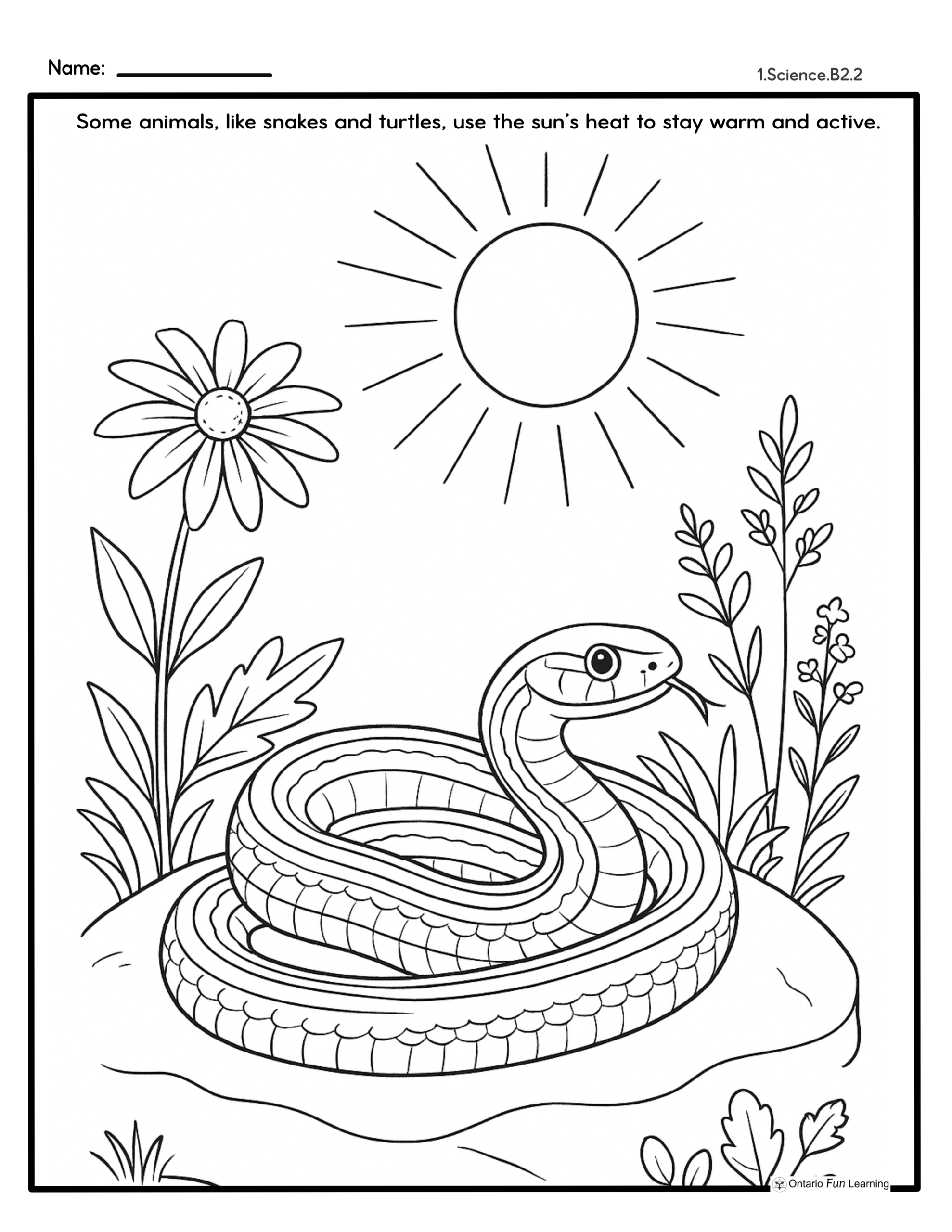
Some animals, like snakes and turtles, use the sun’s heat to stay warm and active.
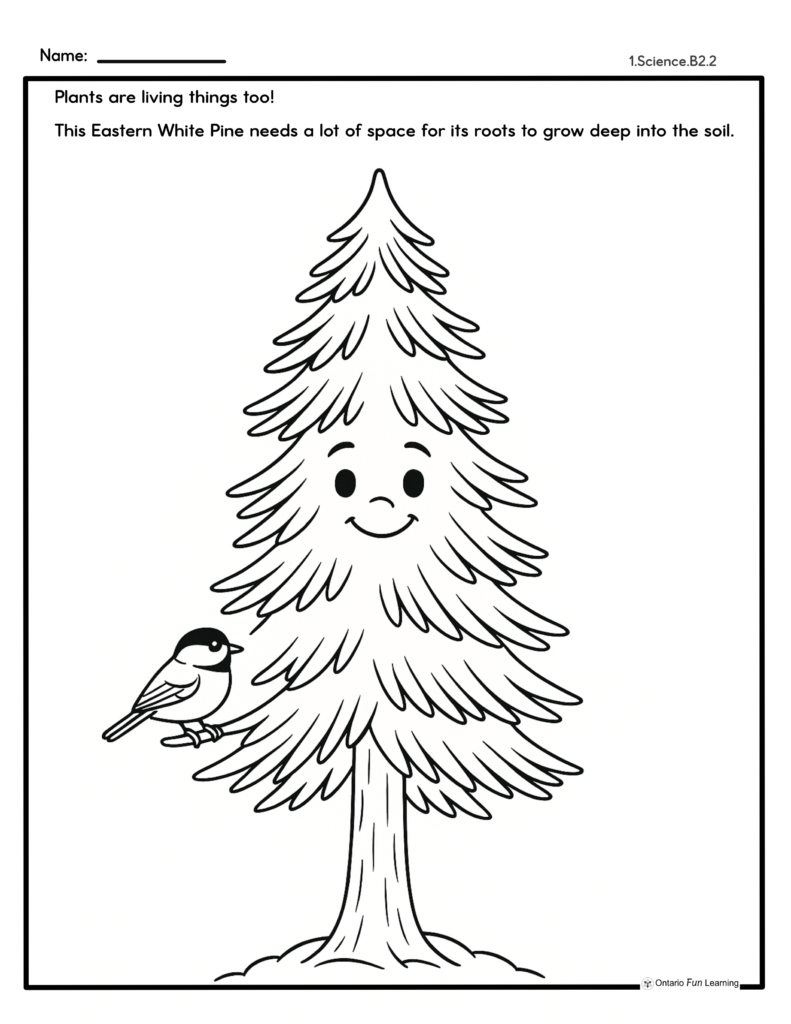
Plants are living things too! The Eastern White Pine needs a lot of space for its roots to grow deep into the soil.
2. Understanding “How” (The “Science” Connection) It’s not just what they need, but how they get it. Students learn that a cactus meets its water needs differently than a pond lily. This helps them understand that animals and plants have special “tools” (traits) perfectly suited for their specific Ontario home.

The Turkey Vulture needs lots of space to flap their wings and fly high in the sky!
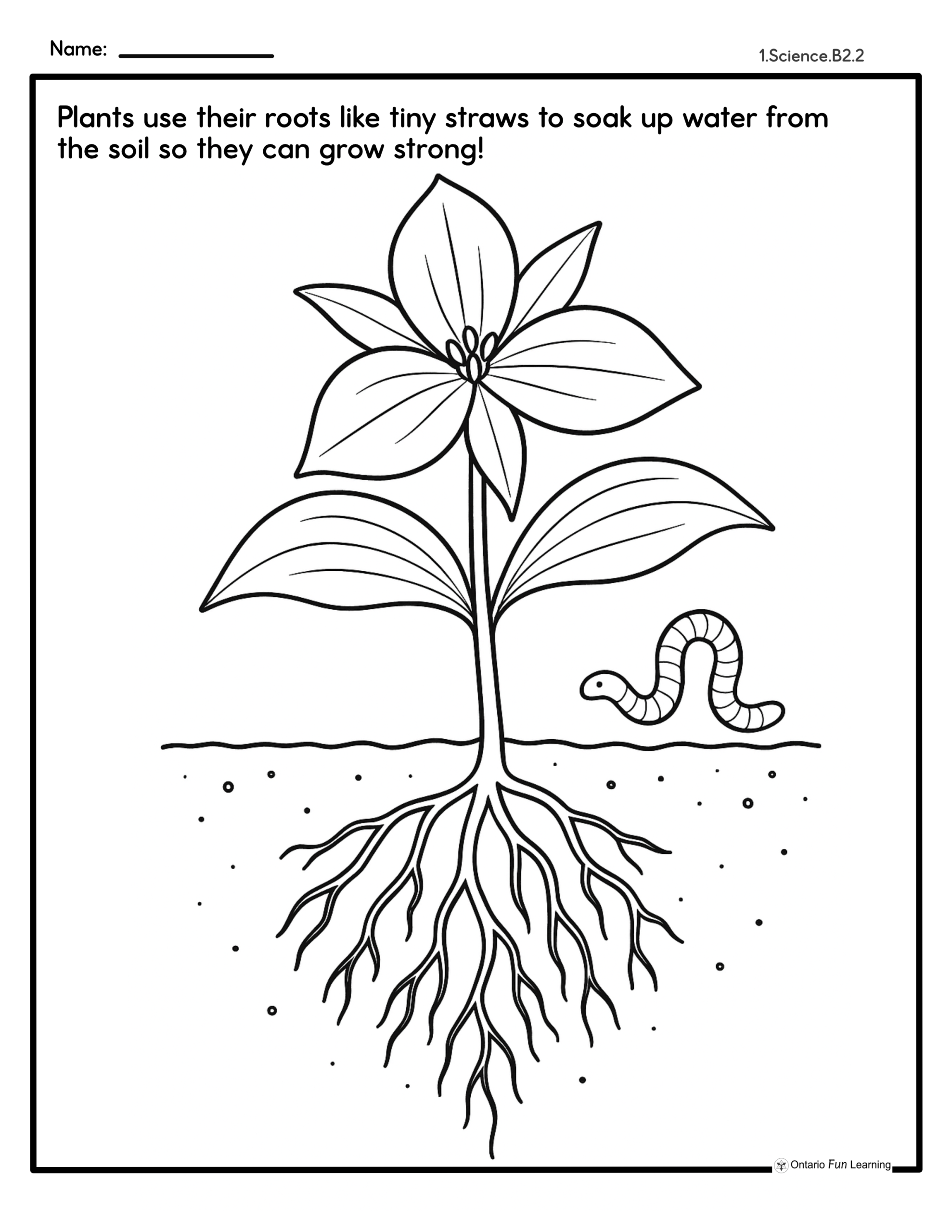
Plants use their roots like tiny straws to soak up water from the soil so they can grow strong!

A shelter, like a beaver’s lodge made of sticks and mud keeps animals safe from the weather and predators.

Raccoons can find food almost anywhere, from berries in the woods to leftovers in a backyard.

Living things need shelter to stay safe and warm. A Black Bear uses a cave or a hollow log as its winter bedroom.
3. The Big Picture (The “Stewardship” Connection) By understanding these six needs, kids start to see why things like pollution (dirty air/water) or building over a meadow (taking away space/shelter) make it hard for nature to survive. It’s the first step in learning how to protect our planet.
B2.3 Physical Characteristics & Basic Needs
Teaching Animal Characteristics in Grade 1
Hello, fellow educators! If you are diving into the Grade 1 Ontario Science Animal Characteristics unit, you know that six-year-olds are natural-born zoologists. They have an innate curiosity about the world around them, and our job is to channel curiosity into scientific inquiry.
We are focusing on Expectation B2.3: describing any physical characteristics of various animals and explaining how these characteristics help the animals meet their basic needs. By focusing on local Ontario wildlife, we make the learning tangible and relevant to our students’ own backyards.

Students develop the ability to group animals into scientific categories based on observable physical traits. In this case, body coverings.

Coming Soon

Coming Soon
Coming Soon
Coming Soon
Tools for Survival
At this age, “physical characteristics” can be a mouthful. I like to frame these as “Body Tools.” Just like a chef uses a whisk to mix or a builder uses a hammer to nail, animals have built-in tools to help them survive.
Animal Body Coverings Worksheet: Cut and Paste Activity
Guided Discussion Questions
- The “Why” of Body Coverings: Look at the animals in the “Fur or Hair” column. Why might a lion or a rabbit need fur to stay alive in its environment? (Encourages thinking about insulation and protection).
- Comparing Scales: Look at the fish and the snake. How are their scales different? Why might a fish’s scales need to be “slippery” while a snake’s are “dry”? (Introduces the concept of adaptation to habitat).
- The Protective Shell: We put the turtle in the “Scales” column. Do you think its hard shell is also a type of body covering? How does it help the turtle stay safe compared to the smooth skin of the frog? (Promotes critical thinking about defensive physical traits).
Local Connections
Using familiar local animals helps students ground their observations. I may sneak in an axolotl here or there because my grade ones love them so much.

Are We Animals, Too?
One of the most profound shifts in a Grade 1 scientist’s mind is realizing that humans aren’t just observing the animal kingdom – we are part of it! To meet the B2.3 science expectation while fostering empathy, try this Think-Pair-Share activity:
“Look at your hands and then look at a squirrel’s paws. We both have ‘fingers’ to grab things. If we both eat, drink, breathe air, and need a home, does that make humans a type of animal? Why or why not?”
- Teacher Tip: Listen for students who mention “clothing” or “houses.” This is a great time to pivot back to the basic needs of animals and show how our “tools” (our brains and hands) help us meet those needs in unique ways.
The “Animal Tool Belt” Drawing
Assessment in Grade 1 should be as “hands-on” as possible. Instead of a traditional quiz, have students demonstrate their learning through a labelled drawing assessment.
The Task:
- Provide students with a template of a local animal (like a Canada Goose or a Painted Turtle).
- Ask them to circle one “body tool” (e.g., the shell or the webbed feet).
- Have them complete a “fill-in-the-blank” sentence starter to explain the function.
Example Student Work:
- Drawing: A Canada Goose with the feet circled.
- Sentence: “My webbed feet help me swim to find my food.”
Why Local Matters
Focusing on physical characteristics of animals found in Ontario, like the fuzzy fur of a Black Bear for warmth (Shelter/Air) or the camouflage of a Grey Squirrel, connects the classroom to the playground. These elementary science activities aren’t just about memorizing facts; they are about teaching our students to look at a living thing and ask, “How does that help you live?”
Happy teaching, everyone! Let’s get those young scientists exploring the incredible “tools” of our local Ontario neighbours.
B2.4 The Human Body & Sensory Organs

Colouring Sheet: Your eyes are protected by eyelids and eyelashes that keep dirt out so you can see clearly.

Colouring Sheet: Your skin tells you if something is hot, cold, soft, or sharp.

Colouring Sheet: Your ear catches sound so that you can understand the noises around you and stay safe.

Colouring Sheet: Your tongue helps you taste and swallow food.

Colouring Sheet: Your nose helps you breathe and smell.
How do I download the PDF files?
Simply click the download link next to each expectation to access free PDFs.
Are the materials aligned with Ontario’s curriculum?
Yes, all resources follow Ontario’s Ministry of Education standards.
Can parents use these resources at home?
Absolutely. These materials are perfect for supporting learning both in classrooms and at home.
Are the resources available in both English and French?
At this time, the resources are available in English only. French translations may be added in the future as time permits.